
'Defence does not new 'planning commissions'; it needs an implementation commission.'

'Nawaz Sharif asked: "What if I invited him and he declined?"' 'I said I will check.' 'Vajpayee liked the idea. He said I should see him on my return.' Shekhar Gupta reveals how Sharif wanted to make peace, but was tripped by the army and notes the lessons it has for Imran Khan.

'It is this new brand of nationalism, where the saffron has elbowed out the other shades in our Tiranga, that will go before the electorate later this year.' 'And it is this new nationalism that will power Modi back into office with 300-plus seats when elections are held,' says Saisuresh Sivaswamy.

The two leaders had some firm convictions in defence matters and are idolised by their respective people because they salved the scarred collective psyches of their societies.
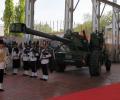
The artillery pounds targets and keeps the enemy's head down, preventing them from firing at attacking troops.
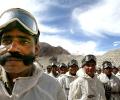
'The Indian military has rightly advised the government not to fall for the rather spurious Pakistani demand to demilitarise Siachen,' says Nitin Gokhale in an interview about his new book Beyond NJ9842: The Siachen Saga.

She said Modi has the mandate to take bold decisions on the lines of Atal Bihari Vajpayee for the resolution of the problems in and around Jammu and Kashmir.

Polling for three parliamentary seats and 29 assembly constituencies were held on October 30, an exercise being seen as a barometer of the political mood in the country ahead of assembly elections in politically critical Uttar Pradesh as well as other states.

Anna said he would travel across the nation to "awaken" people on the issue and it will culminate into a protest at the Ramlila Maidan on October 2.

Only on Wednesday, in his Independence Day speech, Prime Minister Modi said he wants to resolve the Kashmir issue through Vajpayee's doctrine of "Insaniyat, Kashmiriyat, Jamhooriyat" - a testimony to the former PM's lasting legacy.

Your vote now is going to decide whether India fixes itself and becomes a vibrant democracy, or a failed State like the ones in our neighbourhood, says Dasarathi G V.

Narendra Modi's speech at the India Economic Convention was the best such oration since Atal Bihari Vajpayee addressed the nation from the Red Fort in the aftermath of Kargil, feels Shreekant Sambrani.
Gurbax Singh Dhindsa, father of Kargil war martyr GS Dhindsa, in a letter to the PM and defence minister underlining the fact that military personnel have little recourse to justice in higher courts.
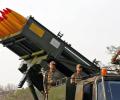
'Even though an India-China military conflict scenario seems unlikely, its possibility gets enhanced if our capabilities are seen to be inadequate by the adversary,' warns Vice Admiral Premvir Das (retd).

'Since India has to live next to Pakistan, it can't remain under permanent blackmail.' 'A predictable consequence of these fundamental shifts is the fraying of the principle of strategic restraint.' 'It hasn't been junked. But the threshold has been shifted to provide India much greater room for retaliatory action,' says Shekhar Gupta.
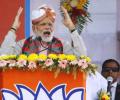
Nationalism, Hindutva, and war on corruption, not growth, will define Modi's politics until 2019.

'It is hard to justify $225 million a plane for an increasingly obsolete mission.' The purchase of the 36 Rafales has changed little for the IAF.
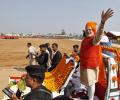
Namo, Namo as India's prime minister? Not yet, says Pakistan-based journalist Amir Mateen.
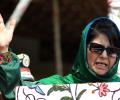
"When the people of BJP (Bharatiya Janata Party) talk of Article 370, they talk of technical integration. We have to make them understand that we also want that Jammu and Kashmir should fully integrate with India emotionally," she said.

'It is imperative to restore the dignity and authority of the services chiefs. Erosion of this has resulted in lowering of service efficiency. It is also time to end the practice of taking seniority as the sole criterion for appointing chiefs.'
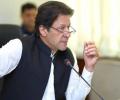
If he doesn't, two things are guaranteed: Failure for him, and continued slide for his nation despite its talented people, strong nationalism, the gift of geography and a formidable army, points out Shekhar Gupta.

The Rashtriya Swayamsevak Sangh perceives the forthcoming Lok Sabha elections to be a fight for its own existence and all that it stands for. Archis Mohan reports

'Unity in diversity is a dated notion as India, today, is more unified and cohesive and yet more pronouncedly diverse than ever in its history,' argues Shekhar Gupta.
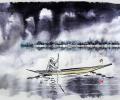
'I would say it is not going to be days and weeks. It is going to be months and years, over which we would make an assessment on the decisions taken by the Parliament at this point of time. 'We are in for a long haul is what I would say.' It was a very diverse India, which was coming together, politically, in a very cohesive, democratically-resilient way." Professor Navnita Behera examines the wisdom of the exit of Article 370 in Jammu and Kashmir.

Mufti Mohammad Sayeed wanted a government with the PDP (representing Kashmir), the BJP (representing Jammu) and the Congress (representing Ladakh), but he failed because the BJp and Congress were unwilling to make any exception to their national level inimical relationship, reveals Mohammad Sayeed Malik.
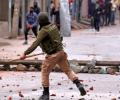
'It is time to not merely assert that Kashmir is an internal problem, but begin to act on it,' argues Colonel Anil A Athale (retd).
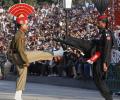
'Pakistan's capacity to carry a normal relationship with India doesn't exist.' 'The relationship with Pakistan is less important than several others.'
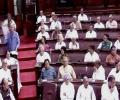
The AgustaWestland issue was fiercely debated in the Rajya Sabha on Wednesday with members of the Bharatiya Janata Party and Congress blaming each other.

The start of Indian lobbying in the US can be traced back to Pakistan's anti-India lobbying. Policy wonk Ashok Sharma documents this journey and its catalytic role in transforming the US-India relationship.
Mr Rahul Gandhi himself has given seven different prices in different speeches with regard to the Rafale, that is the 2007 offer.
We reproduce Aditya's letter to Rajdeep Sardesai in its entirety:

Here is the full transcript of Congress vice president and Lok Sabha poll campaign chief Rahul Gandhi's first formal TV interview with Times Now Editor-In-Chief Arnab Goswami.
 © 2026 Rediff.com - Advertise with us - Disclaimer - Privacy Policy - Sitemap - Feedback - About us - Terms of use - Grievances